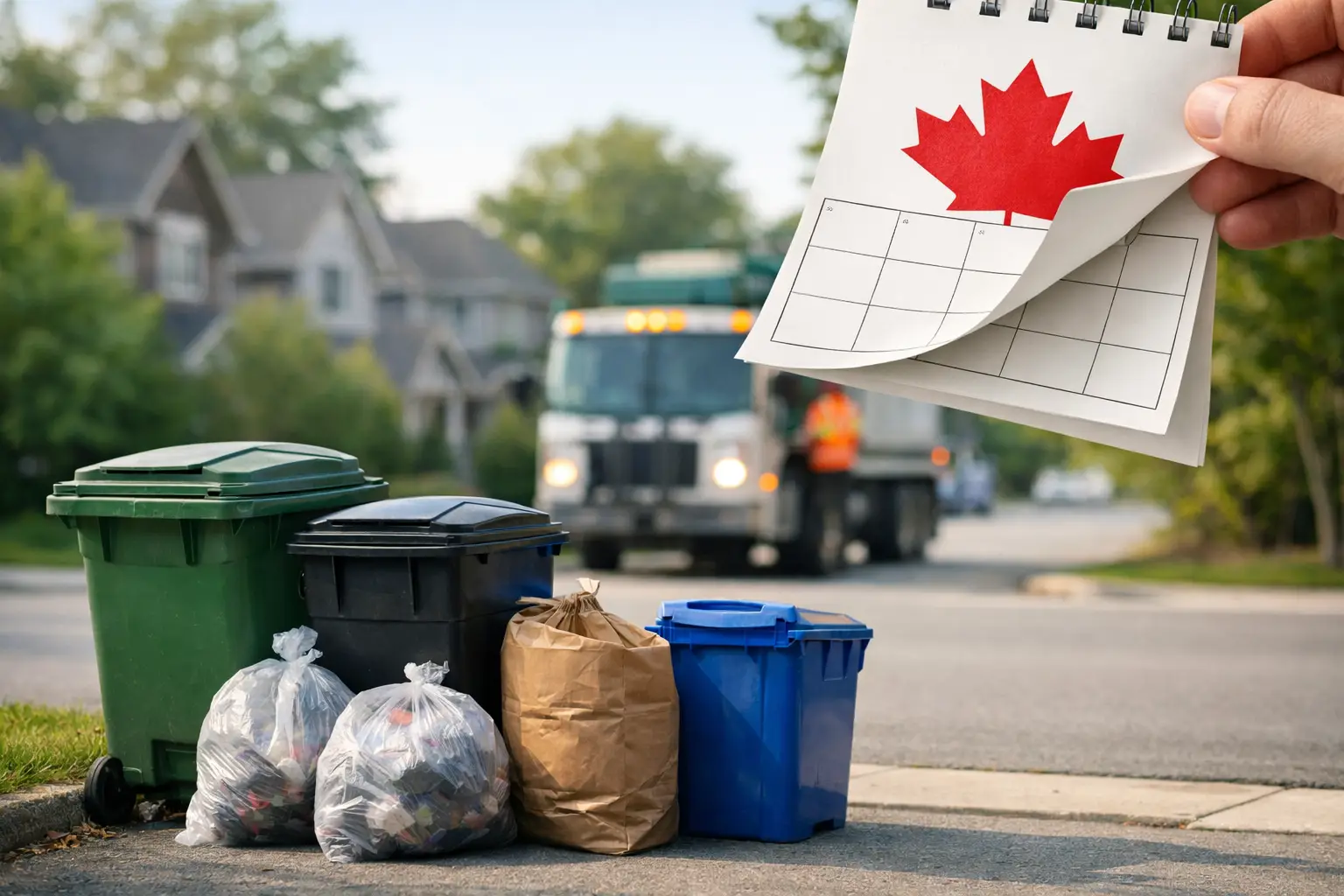
A bin can be at the curb on the same day for months, then suddenly sit there untouched. That is why collection dates suddenly change is such a common household question - the schedule often looks predictable until a holiday, route adjustment, or seasonal program changes the usual pattern.
Most changes are planned, but the notice may be easy to miss. Municipal waste calendars can vary by neighbourhood, collection zone, material type, and time of year. The practical answer is to check the schedule tied to your exact address, rather than relying on what happened last week or what a nearby street follows.
Why collection dates suddenly change
Collection services operate on routes, not just days of the week. A municipality may publish a standard schedule, but it also has to account for statutory holidays, landfill operations, staffing, weather events, road conditions, and service changes. When one part of that system shifts, your pickup may move too.
A change does not always mean every collection stream changes. Garbage may be delayed while recycling stays on its usual day, or green-bin collection may continue while yard-waste pickup ends for the season. That is why a general notice can be less useful than an address-specific schedule.
Holiday schedules move entire routes
Statutory holidays are the most frequent reason for a changed collection date. If a holiday falls on a weekday, crews may not operate that day. Some municipalities move pickup one day later for the rest of the week. Others collect on a different day only for the affected route, while some maintain regular service except on Christmas Day or New Year's Day.
There is no Canada-wide rule. Thanksgiving, Victoria Day, Canada Day, Labour Day, Christmas, Boxing Day, and New Year's can all be handled differently depending on the municipality and the collection contractor. A calendar from last year is not a reliable guide, even when the holiday falls in the same month.
The safest approach is to look for the official holiday notice and confirm the next scheduled pickup for your address. Put bins out only when your local instructions say to do so. Setting them out a day early can be sensible when a delay is possible, but leaving them curbside for days can create issues with wind, animals, snow clearing, or local bylaws.
Seasonal services start, stop, and change frequency
Yard waste is often seasonal. In many Canadian municipalities, it begins in spring and ends in late fall. During that period, pickup may happen weekly, biweekly, or on selected dates. Leaf collection may also follow a separate schedule from regular organics collection.
Green-bin service can change as well. Some areas collect organics weekly during warmer months and less frequently in winter. Christmas tree pickup, bulky-item collection, and special drop-off events are also commonly scheduled outside normal garbage and recycling routes.
These changes can feel sudden because the garbage day has not changed. What changed is the material accepted at the curb or the frequency of one specific stream. Before putting out yard waste or extra bags, check whether the seasonal program is active and whether your municipality requires bags, containers, stickers, or a booking.
Your street may be on a different zone than nearby homes
Two homes a short walk apart can have different pickup days. Collection boundaries may follow a major road, subdivision line, ward boundary, service contract area, or route design that is not obvious from the street.
This is especially common in newer developments, corner properties, townhome complexes, rural addresses, and neighbourhoods that have expanded over time. A neighbour's pickup can be a helpful clue, but it is not confirmation. Their house may be assigned to a different route, even if the trucks pass both homes on the same morning.
Address-level matching matters most when schedules alternate. Recycling may be collected one week and garbage the next, or a municipality may use different calendars for separate zones. A single incorrect assumption can mean waiting another two weeks for the missed material.
Municipalities adjust routes and contracts
Routes need occasional updates. A growing neighbourhood may require a new collection zone. A contractor change, truck capacity review, construction project, or effort to improve route efficiency can also move collection days.
Municipalities generally announce permanent changes ahead of time through notices, websites, mailers, or updated calendars. Still, households can miss the announcement, particularly if they moved recently, manage a rental property, or only check the calendar when something goes wrong.
When a permanent change is announced, update any paper calendar and personal phone reminders right away. Do not assume a change affects only one week. If the municipality has redesigned the route, the new day may be the ongoing schedule.
Weather and service disruptions can create temporary delays
Severe snow, freezing rain, flooding, extreme cold, wildfire conditions, road closures, or a vehicle breakdown can delay collection. Safety comes first when trucks cannot safely access streets or when bins are buried, blocked, or difficult to reach.
A temporary disruption is different from a holiday shift. The municipality may advise residents to leave material at the curb until collection resumes, or it may set a catch-up date. In some cases, crews collect extra material on the next scheduled day instead. Follow the direction provided for that event rather than assuming the usual schedule applies.
If your pickup is missed while other homes on the same block were collected, check for a bin placement issue before reporting it. Common reasons include an inaccessible bin, incorrect sorting, an overloaded container, cars blocking access, or placing the bin out after the truck passed.
How to confirm your next pickup date
Start with the official municipal schedule for your address. Look for a tool that asks for your street number and street name, not just your neighbourhood or postal code. That detail helps ensure you are seeing the correct collection zone.
Next, check each waste stream separately. Confirm garbage, recycling, green bin, and yard waste rather than looking only at the next date displayed. Alternating schedules are a frequent source of confusion, particularly after a holiday week.
Finally, check for service alerts before collection day when weather is poor or a statutory holiday is approaching. A schedule can be correct when published and still require a short-notice operational adjustment.
CurbDay helps households keep this simple by matching an exact address to its local collection zone, showing the next four weeks of pickups, and accounting for official holiday-related changes. An evening-before reminder also gives you time to put out the right bins without keeping another calendar in mind.
Avoid the most common collection-day mistakes
The first mistake is treating a monthly calendar as permanent. A calendar is useful, but it should be checked again around holidays and seasonal transitions. The second is following a neighbour's bins without confirming the address. The third is assuming all materials are collected together.
There is also a timing issue. Many municipalities require bins at the curb by a set morning time, even when crews usually arrive later. Put bins out the evening before when permitted, or early enough to meet your local requirement. If you wait until you hear the truck, the route may already have passed.
For households with more than one property, keep each address separate. A primary home, rental, cottage, or parent's home may all have different zones, collection rules, and holiday schedules. One reminder system should make those differences clear, not blur them together.
Collection changes are inconvenient only when they catch you by surprise. Check the date tied to your address, watch for holiday or service alerts, and let the right reminder handle the routine. That leaves one less household detail to carry around.