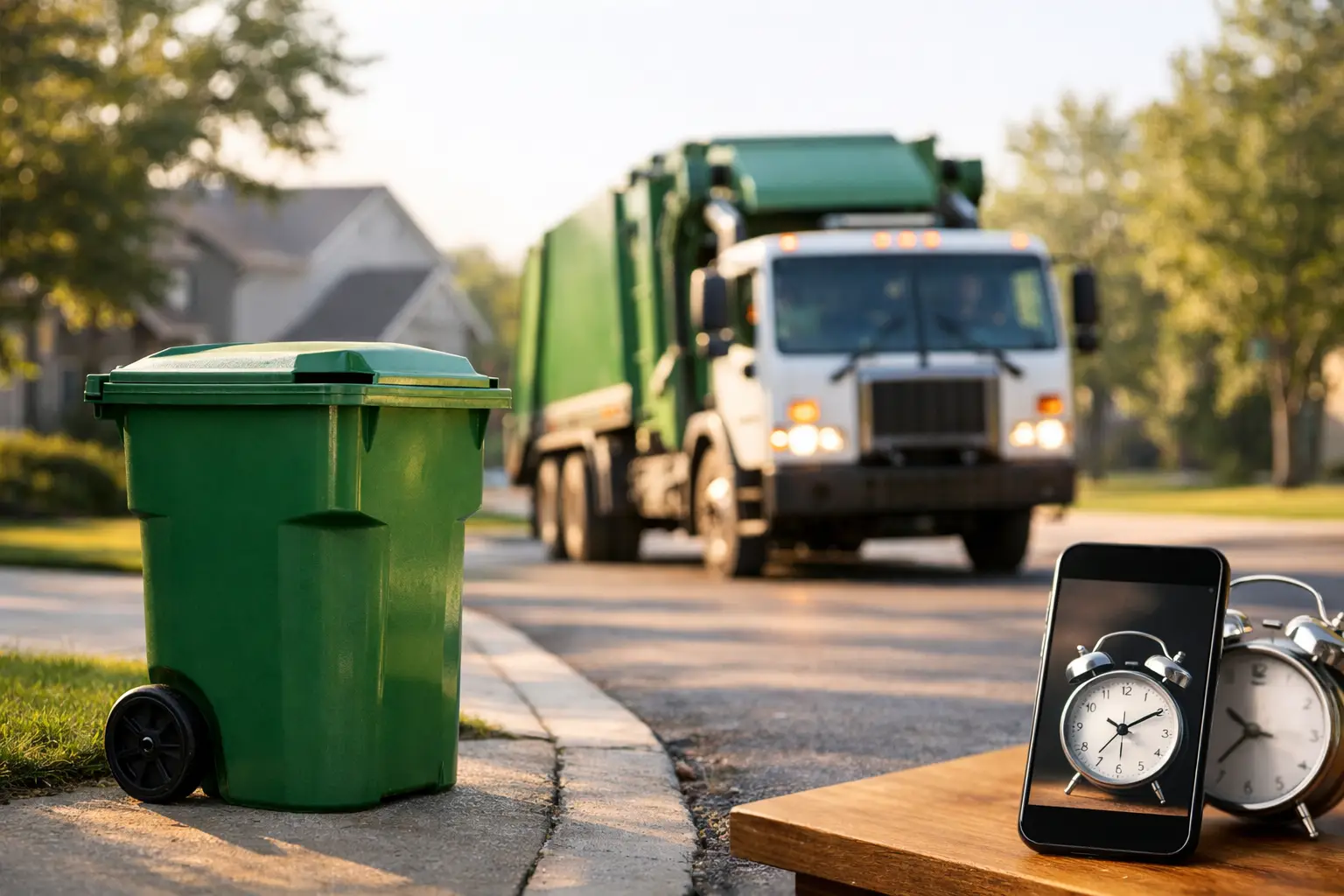
The green bin is often the easiest pickup to miss. Garbage may go out every week, but organics collection can change by zone, season, or holiday. A green bin collection reminder removes that uncertainty, giving your household a clear prompt before the truck arrives.
For busy homes, the benefit is practical. Food scraps do not sit indoors longer than necessary, the bin is ready when it needs to be, and you do not have to keep checking a municipal PDF or trying to remember which week you are on.
Why green bin pickup is easy to forget
Waste schedules are rarely as simple as “put everything out on Tuesday.” Many Canadian municipalities use different collection zones, rotating recycling weeks, seasonal yard-waste programs, and holiday adjustments. Two homes a few blocks apart may not always follow the same schedule.
That is where general calendar reminders can fall short. A reminder set for the same day every week may work until a statutory holiday shifts collection, a seasonal program ends, or an address is assigned to a different route than expected. The reminder arrives, but it is no longer useful.
A reliable system needs to start with the correct address. Once the collection zone is confirmed, the reminder should follow the actual municipal schedule rather than a guess based on a nearby street or a standard weekly pattern.
What a green bin collection reminder should do
A good reminder does not need to be complicated. It needs to tell you what is being collected, when to put it out, and whether the schedule has changed.
For most households, the most useful setup includes an address-specific schedule, a simple view of the next few weeks, and a reminder sent before collection day. Seeing garbage, recycling, green bin, and yard waste together also prevents the common problem of putting out the wrong container.
The timing matters as much as the schedule. An evening-before reminder gives you time to empty kitchen scraps, rinse the small bin if needed, and move the green bin to the curb without rushing through a morning routine. If your household puts bins out after dinner, that timing is usually more practical than an alert at 6 a.m. on pickup day.
Holiday changes should also be handled automatically. Long weekends, winter holiday periods, and municipal service changes are exactly when people are least likely to check a collection calendar. A reminder that stays fixed while the route shifts can create more problems than no reminder at all.
Set up reminders around your real collection schedule
The simplest approach is to build the reminder from your exact home address, not from a broad municipal schedule. This is particularly useful in cities with route-specific calendars or properties near a zone boundary.
Start by checking the next four weeks of collection. This gives you enough visibility to plan without turning waste management into another calendar you need to maintain. Look for the next green bin day, any upcoming recycling rotation, and holiday-related adjustments.
Then choose how you want to be reminded. A single evening-before push notification is enough for many homes. Others may prefer an email backup, a different reminder time, or reminders for several properties. It depends on who is responsible for bins and how many addresses you manage.
CurbDay is designed around this routine: enter an address, see the verified collection schedule, and receive reminders based on that location's municipal calendar. Everything that matters, nothing that doesn't.
One reminder can support the whole household routine
A green bin reminder is not only about remembering to roll a container to the curb. It can make organics sorting easier to keep up with during the week.
When the next pickup is visible, households are more likely to empty countertop containers before they overflow, clear food scraps from the fridge before travel, and make space for the next week's organics. This is especially helpful in warmer months, when missed collection can mean odours, fruit flies, or a bin that is harder to clean.
For families, the reminder can also be a simple shared cue. One person may prepare meals, another may take bins outside, and another may bring them back in. A notification sent at the right time gives everyone the same reference point without relying on a note on the fridge.
Renters can benefit too. If collection responsibilities are shared between units or roommates, an address-based schedule is clearer than relying on a neighbour's bins or assuming the building follows the same route as the houses nearby. Condo residents should confirm whether building staff manage organics collection, as curbside reminders may not apply to every property.
Holiday shifts are where accuracy matters most
Most missed pickups happen when the routine changes. A regular Thursday collection can move after a holiday, or a municipality may publish a temporary service notice that affects only specific routes. If you are relying on an old screenshot, a printed calendar, or a recurring phone alert, there is a good chance it will not reflect the change.
An accurate collection reminder should account for official holiday-related schedule updates. That means the date in the alert should match the current municipal schedule, not simply repeat last week's pattern.
There is a trade-off here. Municipal calendars remain useful for learning local sorting rules, checking accepted materials, and reviewing service notices. But they are not always built for quick, daily household use. Finding your route, scanning a calendar, and manually updating reminders creates several opportunities for a small mistake.
Automated reminders reduce that work. You still decide what goes in the bin and when to place it at the curb. The schedule tracking is handled for you.
Managing more than one address
A single household is straightforward. Multiple properties need a more deliberate setup.
Landlords, property managers, and adult children helping parents may need to follow collection at more than one address. In those cases, a reminder must clearly identify the property and the material being collected. “Green bin tomorrow” is only helpful if you know which home it applies to.
Keep each address separate and use the correct municipal collection zone for each one. Do not assume that a rental, family home, or nearby property follows the same calendar. This is also useful for seasonal homes, where yard-waste and organics schedules may operate differently from a primary residence.
A paid reminder service can be worthwhile when several addresses are involved or when missed collection creates extra work for tenants, family members, or maintenance staff. For one address with a predictable weekly schedule, a basic reminder may be all you need. The right choice depends on how much schedule checking you want to keep doing yourself.
Make the reminder easy to act on
The most effective reminder is specific and arrives at a useful moment. It should say that green bin collection is coming up, identify the address when needed, and reflect any current schedule change. It should not bury the essential detail under extra notifications.
Set a simple household rule alongside it: when the alert arrives, empty the kitchen organics container and place the green bin where it can be taken out. If pickup begins early in your area, move it to the curb the evening before, following local placement rules.
That small routine is easier to maintain than trying to remember dates from week to week. When the schedule is correct and the alert comes at the right time, green bin day becomes one less moving part in a busy household.