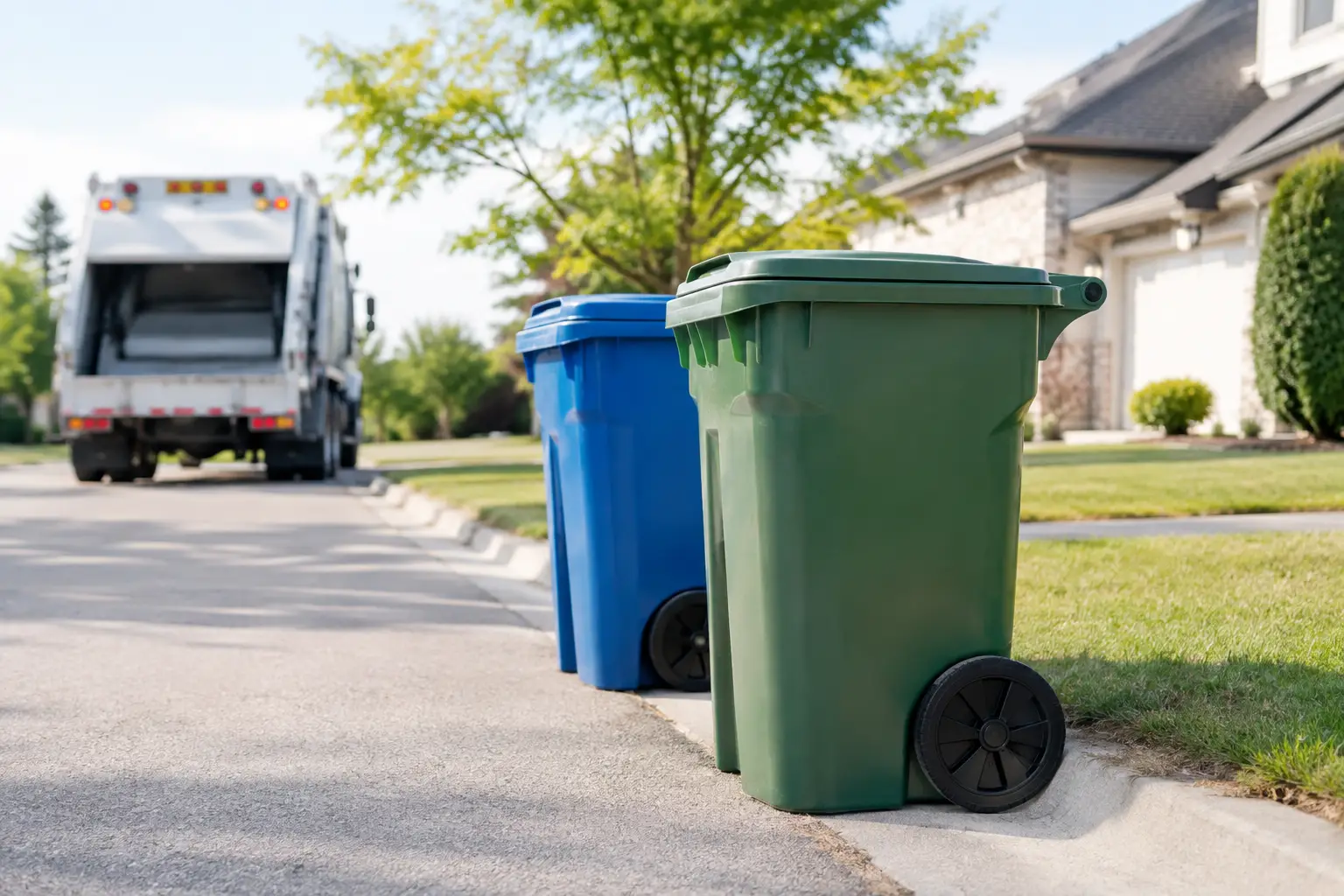
A bin at the curb one hour too late can mean another week of garbage in the garage, an overflowing recycling box, or a green bin that cannot wait. Knowing when to put bins out sounds simple, but collection rules often vary by street, material, season, and holiday schedule.
The reliable answer is this: put your bins out the evening before your scheduled collection day, unless your municipality specifically permits an earlier or later time. This gives you a buffer for early trucks, changing routes, and busy mornings. Then bring bins back in promptly after pickup to keep sidewalks, driveways, and neighbourhood streets clear.
When to put bins out: use the evening-before rule
Most Canadian municipalities ask residents to have bins at the curb by a set morning deadline, often between 7 a.m. and 8 a.m. Collection trucks may arrive earlier than usual due to weather, route changes, or staffing. If you wait until the morning, there is always a chance the truck has already passed.
Putting bins out after dinner the night before is usually the safest household routine. It takes the decision out of a rushed morning and ensures your garbage, recycling, organics, or yard waste is ready before the route begins.
There are exceptions. Some communities restrict how long bins can remain at the curb, particularly in dense urban areas, condo communities, or streets with overnight parking rules. Others ask residents not to place bins out too early because of wind, wildlife, snow clearing, or pedestrian access. Your local municipal instructions take priority over any general rule.
Confirm the correct collection day for your address
Collection schedules are not always citywide. One side of a neighbourhood may receive recycling on Tuesday while the next block receives it on Wednesday. Garbage and green-bin pickup may happen weekly, while recycling alternates every other week. Yard waste can run only during designated spring and fall periods.
That is why a calendar from a neighbour, a general municipal webpage, or last year's printed guide may not be enough. Check the schedule connected to your exact address and collection zone.
A useful schedule should show more than the next pickup. It should tell you which material is being collected and make alternating weeks easy to see. For example, your next four weeks might include weekly green-bin collection, biweekly recycling, one garbage day, and a yard-waste pickup that begins later in the month.
CurbDay is designed for this exact task: enter an address, see the applicable municipal collection schedule, and receive a reminder before collection. Everything that matters, nothing that doesn't.
Put out only the bins being collected
Not every bin belongs at the curb every week. Putting out the wrong container creates clutter and can lead to avoidable sorting problems. Before taking bins out, check whether the next collection is for garbage, recycling, green bin, yard waste, or a combination of services.
Garbage collection is commonly less frequent than organics collection, especially where green-bin programs are well established. Recycling may alternate between paper and containers in some municipalities, or it may be collected together on a biweekly schedule. Yard waste is often seasonal and can have separate requirements for paper bags, bundled branches, or approved containers.
This matters most around long weekends and at the change of seasons. A familiar weekly routine can be misleading when the city switches to a holiday schedule or starts its autumn leaf collection program.
Check holiday changes before the long weekend
Holiday shifts are one of the most common reasons bins are missed. A statutory holiday can push pickup one day later, move it earlier, or leave the regular schedule unchanged. The rule depends on the municipality and sometimes on the service contractor.
Do not assume that every holiday creates a delay. Check the official schedule for your address. If collection normally happens on Monday, for example, a holiday may move it to Tuesday - but in another municipality, the route may still run as usual.
The same caution applies to severe weather. Cities may delay collection during snowstorms, freezing rain, flooding, or extreme heat. If service is suspended, leave materials in a safe place until the municipality announces the recovery plan rather than placing extra bins or bags at the curb without confirmation.
Set bins out correctly, not just on time
A bin can be ready at the right time and still be missed if it is blocked, overloaded, or facing the wrong way. Municipal collection equipment needs room to work, especially where automated trucks lift carts mechanically.
Place bins at the curb or roadside on level ground, with wheels and handles facing your home if local instructions require that position. Leave enough space between carts so the truck's arm can grab each one. Keep them clear of parked cars, utility poles, mailboxes, snowbanks, and low branches.
Lids should close fully. Overfilled bins can spill, attract animals, or be left behind if materials are unsafe to collect. During windy weather, secure loose recycling and keep lightweight containers from blowing into the street. In winter, clear a path to the curb and avoid placing bins behind snowbanks where crews cannot reach them.
For households using bags rather than carts, follow local limits for bag count, weight, tags, and placement. Extra garbage is not always collected automatically. A quick check before collection day can prevent a full bag from sitting at the curb for another week.
Build a routine that survives busy weeks
The easiest waste routine is one that does not depend on memory. Choose one time each evening to check tomorrow's collection, such as after dinner or while packing lunches. If a pickup is scheduled, take out the relevant bins before the night ends.
This is especially helpful for households with changing routines. Parents managing school mornings, renters in shared homes, landlords checking multiple properties, and adult children helping family members all have enough to remember already. Collection day should not require studying a PDF or counting alternating weeks on a wall calendar.
A reminder works best when it gives you enough time to act. An evening-before notification is more useful than an alert at 7 a.m., when the truck may already be nearby. If you manage more than one address, keep each property's schedule separate so a reminder for your home is not confused with one for a rental or a parent's house.
What to do if you miss pickup
First, check whether the truck has completed the route or whether collection is delayed. Trucks can arrive later than usual, and a missed-looking pickup may simply be running behind. If neighbours' bins are still full, wait for a service update before assuming yours was skipped.
If other homes on your street were collected and yours was not, check for an obvious issue: a blocked cart, an open lid, prohibited material, missed sorting requirements, or a bin placed out after the truck passed. Then follow your municipality's missed-collection reporting process within its stated timeframe.
Avoid leaving bins at the curb indefinitely. Bring them in if the route has finished, keep materials contained, and prepare for the next available pickup. If you have extra waste, verify whether your municipality allows a tagged bag, a temporary overflow option, or a drop-off facility.
A small habit with a useful payoff
Collection schedules are easy to overlook because they are routine - until one missed day disrupts the week. Put bins out the evening before, verify the material being collected, and check for holiday changes whenever a long weekend approaches.
A dependable reminder turns that task into one less thing to carry in your head. Set the routine once, then let collection day arrive without surprises.