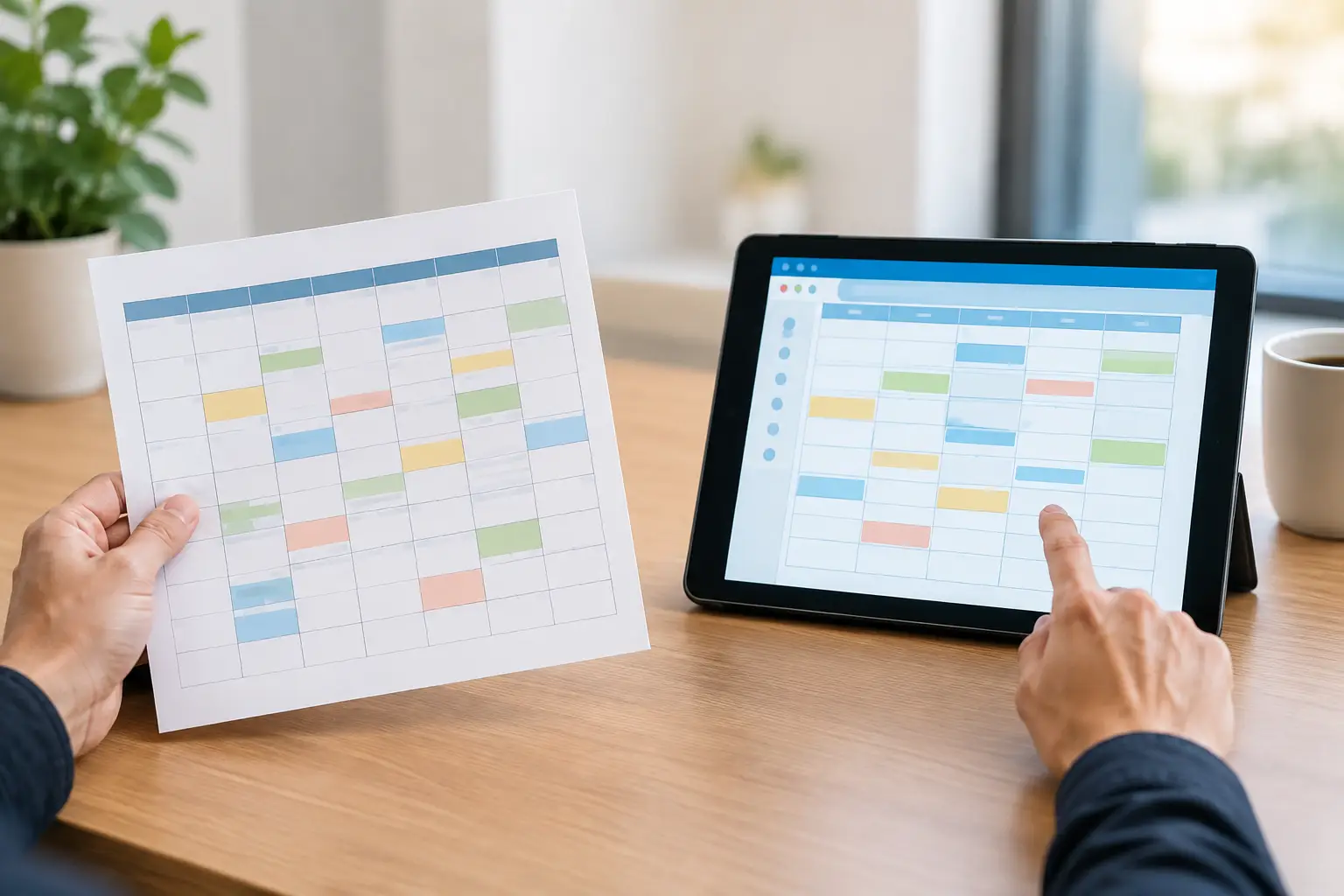
A municipal PDF versus digital schedule is not simply a choice between paper and a screen. It is a choice between checking collection details yourself and having the right details ready when you need them. For households juggling work, school, sorting rules, and changing pickup weeks, that difference can decide whether bins make it to the curb on time.
Municipal calendars remain an official and useful source of information. But they were not always designed around the practical question people ask on a Tuesday evening: what goes out tomorrow? A digital schedule can answer that question quickly, provided it uses the correct address, collection zone, and verified municipal data.
What a Municipal PDF Does Well
A municipal PDF usually provides a full-year view of waste collection. It may include garbage, recycling, green-bin, yard-waste, bulky-item, and holiday information, along with sorting guidance. For residents who prefer to print a calendar and keep it on the fridge, it can be a dependable reference.
It also gives households a direct record of the municipality's published plan. If collection services change, the municipality can issue an updated document or post a service notice. For people who only need to check a date occasionally, downloading the PDF may be all they need.
The limitation is that a citywide calendar often contains more information than a household needs at one time. A resident may have to identify a zone, find the right colour or lettered cycle, interpret alternating weeks, and then account for a statutory holiday. The information is there, but the household is responsible for turning it into an action.
That works well for organized routines. It is less reliable when collection days vary by block, recycling alternates, a move changes your zone, or several people share responsibility for putting bins out.
Where PDF Calendars Create Friction
A PDF is static once it has been downloaded or printed. If the municipality changes a holiday collection date after the calendar was issued, the resident needs to see the update, understand how it applies to their route, and remember the revised date. A notice on a municipal website does not automatically reach the kitchen calendar.
Zone-based collection adds another layer. Two streets in the same neighbourhood may have different collection days, and even addresses on opposite sides of a boundary can follow separate schedules. Selecting the wrong calendar can create a routine that looks correct for months until a missed pickup reveals the error.
There is also the problem of timing. A yearly document is useful for planning, but it is not a reminder. It cannot tell a tenant that recycling is tomorrow, prompt a busy parent before an early meeting, or help a landlord track the schedule at a rental property. The calendar still depends on someone remembering to look at it.
None of these issues make municipal PDFs bad. They show why a published calendar and a household-ready schedule serve different jobs. One is a broad reference. The other is a practical tool for getting the right cart to the curb.
Municipal PDF Versus Digital Schedule: The Practical Difference
The best digital schedules reduce the number of steps between an official collection calendar and a household's next pickup. Instead of reading a full-year chart, you enter an address and see the upcoming dates that apply to that location.
That address-level approach matters. A useful service should match the household to its correct municipal zone rather than show a generalized city schedule. It should distinguish garbage from recycling, green bin, and seasonal yard waste, then present each collection type in plain language.
A four-week view is often more useful than a full-year page. It shows enough time to plan ahead without asking people to decode a chart. If recycling is every other week, the pattern is visible. If yard waste begins seasonally, the next applicable pickup can appear alongside regular service.
Reminders are the other major difference. A schedule tells you the date. A reminder turns that date into a prompt at a useful time, such as the evening before collection. This is especially helpful for households where one person handles garbage, another manages recycling, and neither wants to carry the whole routine in their head.
Digital does not automatically mean accurate, however. A generic reminder app that repeats "garbage day" every Tuesday can be worse than a PDF if it ignores zone boundaries, alternating services, or holiday shifts. The value comes from verified municipal-source data combined with precise address matching and ongoing schedule maintenance.
Holiday Changes Are the Real Test
Most collection routines work until a holiday interrupts them. A Monday statutory holiday may push service forward by a day, alter only specific routes, or have no effect at all, depending on the municipality. Residents who assume the usual schedule may leave carts out too early, too late, or not at all.
With a PDF, the answer may be printed in a note, listed in a separate holiday table, or posted later as a service alert. It is possible to find, but it requires a check at the right moment.
With a properly maintained digital schedule, the changed date should replace the normal date in the upcoming view and be reflected in the reminder. That is the standard households should expect: no guesswork, no mental adjustment, and no need to remember which holiday moves which pickup.
This matters most during busy weeks. Long weekends, school breaks, and family visits are exactly when routine details are easiest to miss. A schedule that handles official holiday changes quietly can remove one more small but recurring source of household stress.
Which Option Fits Your Household?
A municipal PDF may be the right choice if you have one address, a stable collection routine, and someone who regularly checks the calendar. It is also useful as a detailed reference for sorting instructions and annual service dates.
A digital schedule is usually the better fit when convenience and consistency matter more. That includes households with alternating recycling weeks, new residents learning local collection rules, renters who do not receive municipal mail, and families with more than one person responsible for bins.
It is particularly useful for multi-address households. Property managers, landlords, adult children helping a parent, and cottage owners may need to keep track of several municipal schedules. Separate address-specific views are clearer than trying to label multiple PDFs or maintain several calendar entries by hand.
The right choice also depends on how often your municipality changes service details. In areas with straightforward weekly pickup and few disruptions, a PDF can be enough. In areas with zone calendars, seasonal programs, and holiday adjustments, a schedule that updates the next collection date automatically saves more time and prevents more mistakes.
What to Look for in a Digital Collection Schedule
Before relying on a digital service, check how it determines your schedule. It should use your exact street address, not just your postal code or municipality name. Postal codes can cover several collection routes, so they are not always precise enough for pickup-day matching.
Look for a clear upcoming view rather than a crowded annual calendar. You should be able to tell at a glance what goes out next and when. The service should also identify collection types clearly, since "pickup day" can mean different things when garbage, recycling, organics, and yard waste follow separate cycles.
Reminder options should match real household habits. An evening-before notification gives time to prepare bins without requiring a morning scramble. Email backup reminders can help people who do not keep browser notifications enabled, while adjustable timing is useful for households with different routines.
Finally, confirm that official schedule changes are incorporated. Accuracy is not only about matching the normal Tuesday route. It is about continuing to show the right answer after a holiday, a seasonal program change, or a municipal calendar update.
CurbDay is built around that practical standard: enter an address, see the next four weeks of verified collection dates, and receive a reminder before pickup. Everything that matters, nothing that does not.
A PDF can still have a place on the fridge. But if the goal is fewer missed pickups and less calendar checking, choose the format that does more than store information. Choose the one that brings the correct next collection day to you before it becomes urgent.