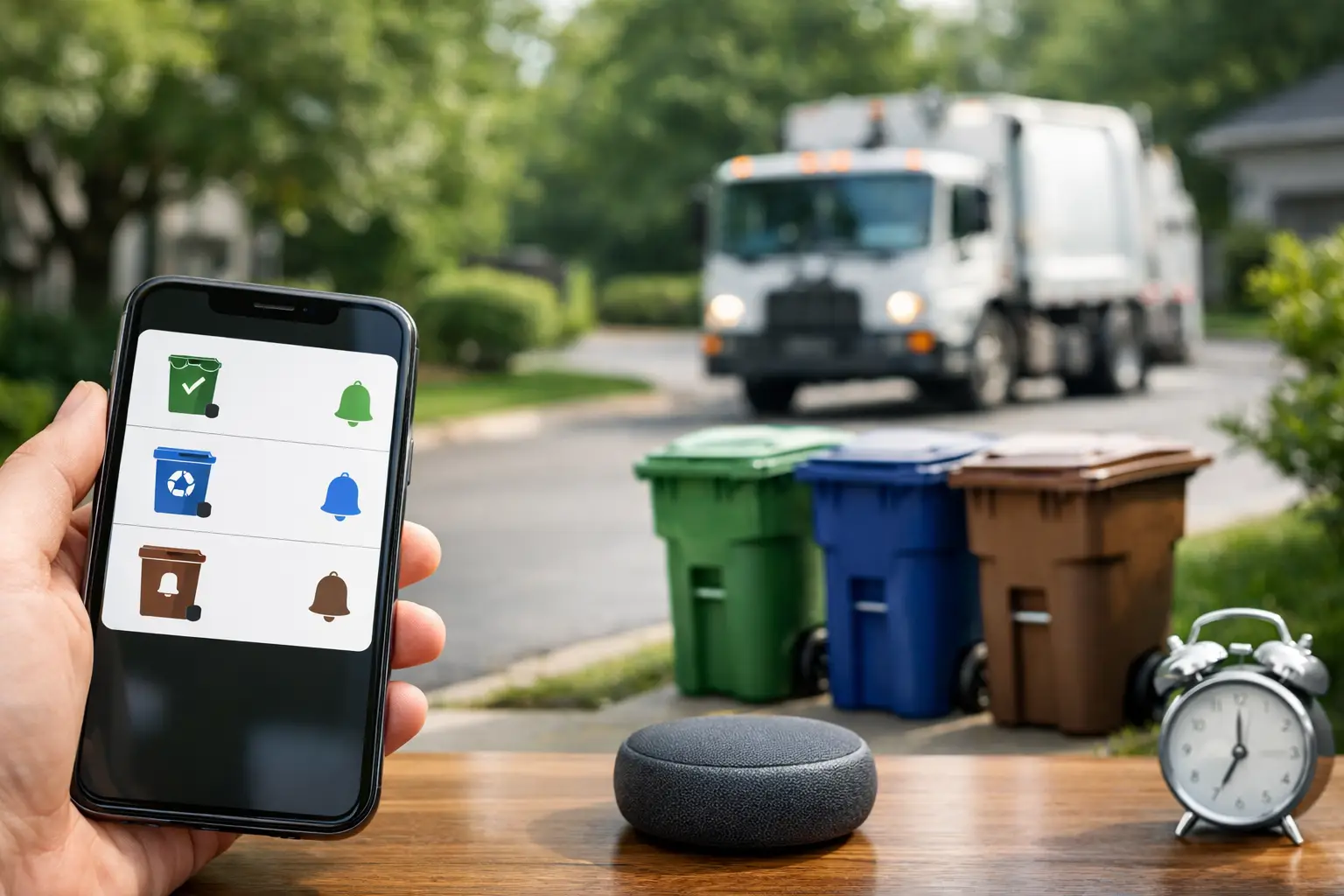
At 7:15 on a Tuesday morning, a missed garbage pickup is not a small inconvenience. It can mean full bins, extra storage in the garage, and two weeks of waiting for the next collection. Knowing how to set bin reminders properly turns collection day into one less household task to remember.
The key word is properly. A generic weekly phone alert may work for a simple garbage route, but many Canadian municipalities use alternating recycling weeks, separate green-bin days, seasonal yard-waste collection, and holiday shifts. Your reminder needs to follow your exact address and collection zone, not just a calendar date you entered months ago.
Start with the correct collection schedule
Before creating any reminder, confirm the schedule for your address. Municipal collection calendars often cover several zones, and even neighbouring streets may have different pickup days. A reminder based on the wrong zone is still a missed pickup waiting to happen.
Use your municipality's official waste collection information and enter your full street address where available. Check the next four weeks rather than only the next pickup. This makes it easier to spot patterns: garbage every second week, recycling on alternating weeks, or organics collected weekly.
Look for every material your household puts out. That may include garbage, recycling, green bin or organics, yard waste, bulky items, and seasonal leaf collection. Not every stream follows the same cycle. A reminder that simply says “bins out tomorrow” can be useful, but a reminder that identifies the right bin is much better.
How to set bin reminders in five practical steps
1. Choose when you need the prompt
Most households benefit from an evening-before reminder. It gives you time to move bins to the curb, finish sorting recycling, or ask someone else in the household to handle it. A 6 p.m. reminder is often early enough to act on and late enough that everyone is home.
A morning reminder can work if bins are stored close to the street and your pickup happens later in the day. The trade-off is risk: collection trucks may arrive earlier than expected, especially after weather delays or during busy periods. If missing a pickup would cause a problem, use the evening before as your primary alert.
2. Name the bin in the reminder
Avoid vague labels such as “garbage day.” Use the collection stream in plain language: “Green bin and recycling out tonight” or “Garbage pickup tomorrow.” Clear wording prevents the common mistake of putting out every bin when only one is scheduled.
If your phone calendar allows notes, add the essentials: place bins at the curb by the required time, keep lids closed, and follow local sorting rules. Keep it short. The reminder should prompt action, not become another message to read later.
3. Build in alternating weeks
Alternating schedules are where manual reminders often fail. Recycling may be collected one week, garbage the next, while green-bin collection remains weekly. Setting a recurring alert every Tuesday will not account for that rotation unless you create separate events for each pattern.
You can create two repeating calendar events, one for each alternating week, then label them clearly. This works if your municipality keeps a stable schedule and you are comfortable maintaining it. It also requires checking that the first event is anchored to the correct week. One incorrect starting date can put every future reminder out of step.
For households with separate yard-waste periods, create a temporary reminder only for the dates published by your municipality. Do not leave it repeating year-round. Seasonal collection rules and accepted materials can change.
4. Account for holidays before they cause a miss
Holiday changes are the weakness in most DIY calendar setups. A municipality may move collection ahead by a day, delay it by a day, or use a different schedule for an entire week. Statutory holidays, winter weather, and operational changes can all affect service.
Review holiday notices whenever a long weekend approaches. If you use a calendar, update the affected reminders rather than assuming your usual pattern will apply. This is manageable for one address, but it becomes a regular chore for landlords, property managers, or families helping relatives with household routines.
5. Use a service that updates the schedule for you
The simplest setup is an address-based reminder service that matches your home to the correct municipal collection zone, shows upcoming pickups, and handles official schedule changes. Instead of recreating a city calendar by hand, you enter the address once and receive a reminder based on the active schedule.
CurbDay is designed for this exact job. It provides a concise four-week view of garbage, recycling, green-bin, and yard-waste pickup dates for a supported address, with an evening-before push reminder. Holiday-related changes are based on official municipal information, so there is less to maintain and less to second-guess.
Choose the reminder method that fits your household
A phone alarm is quick to set up and costs nothing, but it is best for predictable schedules. It depends on you checking holidays and adjusting alternating weeks. It can also disappear among work alerts, school notifications, and delivery updates.
A calendar reminder gives more detail and can be shared with a partner or family member. It is a reasonable option if one person is willing to maintain it. For a single household with a straightforward route, that may be enough.
Address-specific pickup reminders are a better fit when collection changes regularly, when more than one bin stream is involved, or when the person managing the home is already carrying too many routine details. The advantage is not another app or another calendar to monitor. It is removing the need to interpret the schedule in the first place.
For multiple properties, keep each address separate. A rental unit, cottage, parent’s home, or vacant property may have a different collection zone and set-out time. Never copy one address’s recurring reminder to another without confirming the route. Similar-looking calendars are not proof of matching service.
Make reminders useful for everyone at home
Bin reminders work best when they are visible to the person who can act on them. If one partner receives every alert but another usually takes bins out, the system has a gap. Share the calendar event, enable an email backup, or agree on a simple household routine: the reminder arrives, and the bins go out.
Consider practical exceptions too. If you are away overnight, arrange for a neighbour to move the bins after the reminder. If your building has shared containers, use the alert as a prompt to take sorting downstairs rather than to place a curbside bin out. Condo residents should confirm whether municipal collection applies directly or whether building management follows a separate waste schedule.
Keep a small amount of flexibility. Pickup times can vary, and severe weather may change operations with little notice. A reliable reminder tells you what is scheduled, but checking official municipal notices during major storms remains sensible.
A good bin reminder should feel almost invisible. It arrives before collection day, identifies what belongs at the curb, and reflects the schedule for your address. Set it once, keep the schedule accurate, and let tomorrow’s pickup stop competing for space in your head.