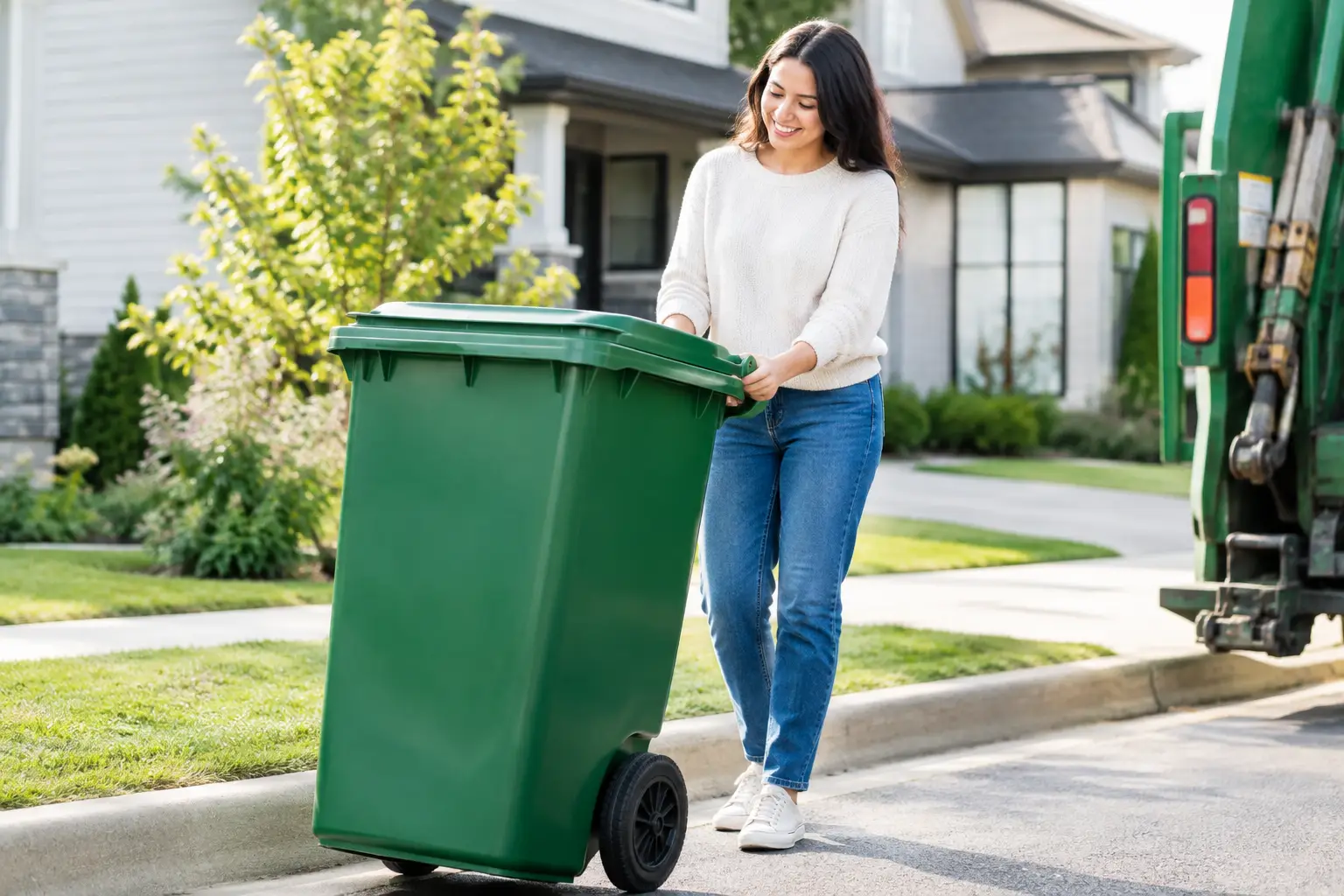
A green bin is one of the easiest ways to keep food scraps and yard material out of landfill, but only when it reaches the curb on the right day and contains the right items. The difficulty is rarely the bin itself. It is the local rules, alternating collection weeks, seasonal changes, and holiday shifts that make a simple household routine easy to miss.
For Canadian households, green bin collection is municipal and address-specific. Your neighbour across the street may have a different pickup day, and a citywide holiday can move the schedule for an entire week. A clear routine takes the guesswork out of it.
What a Green Bin Is For
A green bin, sometimes called an organics bin, is collected separately from garbage and recycling. Its purpose is to divert compostable material from landfill, where food waste creates methane as it breaks down without enough oxygen.
What your municipality accepts depends on its processing facility and local contract. That means the label on the bin, the municipal collection guide, and the schedule for your address should always take priority over general advice. Some programs accept items that others do not, particularly pet waste, soiled paper products, certified compostable liners, and cooked food.
In most Canadian green bin programs, accepted material commonly includes:
- Fruit and vegetable scraps, peels, pits, and cores
- Meat, bones, fish, dairy, eggs, and leftovers
- Coffee grounds, filters, tea bags, and paper towels
- Bread, grains, baked goods, and plate scrapings
- Yard material where organics and yard waste are collected together
The wider acceptance of cooked food and meat is one reason municipal organics programs can make such a difference. Households do not need to separate every meal scrap into a compost pile. They simply need to keep non-compostable packaging out of the bin.
What Should Stay Out of the Green Bin
The most common green bin problem is not too little participation. It is contamination. A plastic produce bag, a coffee pod, a foil lid, or a piece of cutlery may seem small, but it can interfere with the equipment that processes organics. Contaminated loads can be rejected or require additional sorting.
Unless your municipality specifically says otherwise, keep plastic bags, wrappers, beverage cups, metal, glass, diapers, wipes, and takeout containers out. “Compostable” packaging needs extra care too. A product may be certified compostable but still be unsuitable for your local program if the facility cannot process it within its operating timeframe.
When an item is unclear, do not rely on the colour of the package or a broad online search. Check your municipality's accepted-items guide. Local rules are the useful rules.
Paper liners, newspaper, and bag choices
Many households line a kitchen catcher to make cleanup easier. Depending on local policy, this may mean newspaper, a paper bag, an approved compostable liner, or no liner at all. Some municipalities permit certified compostable bags; others ask residents to place food scraps loose or wrapped in paper.
This is a practical choice, not a universal one. Paper can absorb moisture and reduce mess, but a wet paper bag may tear in summer. Approved liners can be convenient, but only if they are accepted locally. If loose material is permitted, freezing especially messy scraps until collection day can keep the bin cleaner.
Green Bin Collection Days Are Not Always Fixed
The collection date matters as much as the sorting. Green bin pickup may happen every week, every other week, or on a different cycle from garbage and recycling. Yard waste may be added only during certain months. In multi-unit buildings, collection can follow a private hauler schedule rather than the municipal curbside calendar.
Holiday weeks add another layer. A statutory holiday can delay collection by one day, shift an entire route, or have no effect at all. The answer depends on the municipality and the service provider, which is why last year's schedule is not a reliable backup plan.
A calendar that matches your exact address is more useful than a general collection notice. It accounts for zone boundaries and presents the next pickup date instead of asking you to interpret a large PDF or remember a complicated rotation.
A Simple Set-Out Routine
The best routine is one that works on a busy evening, not just on a quiet weekend. Keep a small container where food preparation happens, empty it regularly, and move the full green bin to the curb before collection day.
Check local instructions for set-out time, placement, weight limits, and clearance from cars or snowbanks. In many communities, bins must be at the curb early in the morning, so putting it out the evening before is the safer option. Keep the lid closed to discourage animals and prevent rain or snow from adding unnecessary weight.
CurbDay can help by matching an address to the correct municipal collection zone, showing upcoming green bin, garbage, recycling, and yard-waste dates in one four-week view, and sending a reminder before pickup. It is a simple safeguard when collection cycles or holidays interrupt the usual pattern.
Winter and summer adjustments
Green bins need different attention through the year. In winter, wet scraps can freeze to the bottom. Layering the bin with accepted paper products, keeping it sheltered where possible, and avoiding excess liquid can help. Do not use salt, antifreeze, or other chemicals to free frozen material.
During warmer months, odour and fruit flies become the bigger concern. Empty the kitchen container often, rinse the curbside bin when needed, and store meat or seafood scraps in the freezer until set-out day if pickup is less frequent. A closed lid and a clean bin usually solve most problems without adding complicated steps.
If Your Green Bin Was Not Collected
Before reporting a missed pickup, check whether the collection schedule changed because of a holiday, weather event, or service disruption. Then look at the bin itself. A tag or sticker may explain that it was too heavy, placed out late, contaminated, blocked, or set out incorrectly.
If the bin was out on time, correctly placed, and free of prohibited material, report the missed collection through your municipality or local waste provider as soon as possible. Many services have a limited window for reports. Leave the bin at the curb only if the municipality instructs you to do so.
For a missed green bin, avoid putting organics in the garbage unless local guidance says otherwise. Store material securely until the next pickup, use an approved backyard compost option if available, or ask whether a drop-off site serves your area.
Make the Green Bin Part of the Household System
The green bin works best when everyone at home knows two things: what goes in it and when it goes out. A short accepted-items note near the kitchen container can prevent sorting mistakes. A reliable reminder can prevent the more frustrating mistake of leaving a full bin by the door while the truck passes outside.
Collection should not require mental bookkeeping. Set a simple routine around your address, follow the local rules that apply to your bin, and let the next pickup date guide the rest.