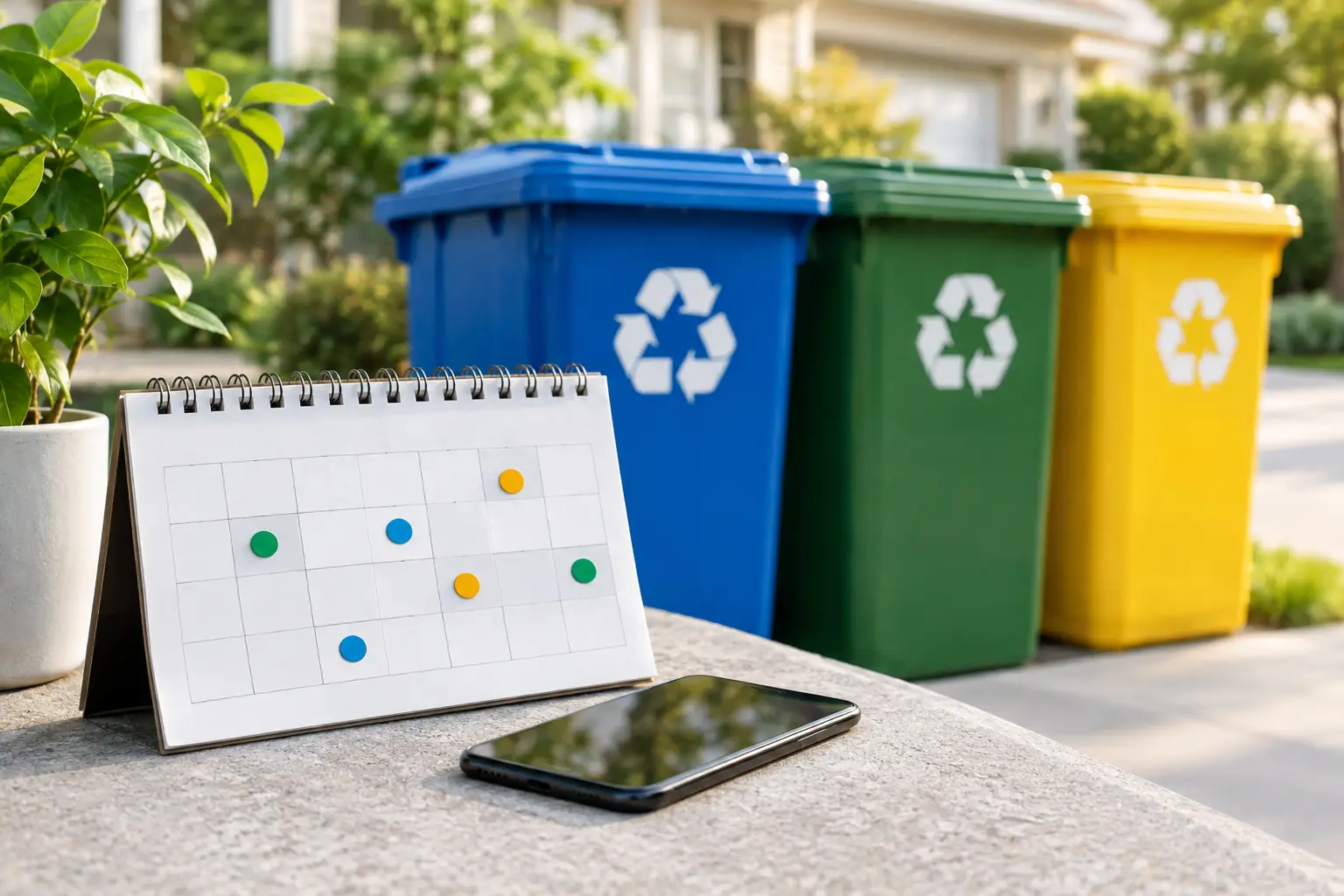
A recycling bin left at the curb one day late can mean two more weeks of cardboard in the garage, especially where pickup alternates with garbage collection. The best ways to remember recycling are not about trying harder. They are about setting up a reliable system that knows your address, follows your local schedule, and gives you enough notice to act.
That matters because recycling schedules are rarely as simple as “every Tuesday.” Municipalities use collection zones, alternating weeks, seasonal programs, and holiday adjustments. A method that works for one household may fail for another just a few blocks away.
Why recycling days are easy to miss
Most missed pickups happen when a routine changes. A long weekend shifts collection by a day. A new tenant assumes the building follows the same schedule as their last home. A busy week means no one looks at the paper calendar on the fridge.
Recycling can also be less frequent than garbage, which makes it harder to remember by habit alone. If collection is every other week, the question is not just “What day is it?” It is “Is this the recycling week?” That extra step is where memory becomes unreliable.
The practical answer is to remove that decision from your evening routine. Use a schedule that is specific to your property and pair it with a reminder that arrives before bins need to go out.
The best ways to remember recycling pickup days
1. Start with your exact collection zone
Before setting any reminder, confirm the recycling schedule for your specific address. Citywide calendars and neighbourhood posts can be useful, but they are not always precise enough. Boundaries between collection zones can run through the same community, and one side of a street may follow a different rotation.
Look for an address-level schedule based on official municipal collection information. It should show recycling alongside garbage, green-bin, and yard-waste collection, rather than making you piece together separate calendars. A clear four-week view is often enough to see the pattern without turning waste day into another planning task.
This step is especially useful after moving, managing a rental, or helping a parent keep up with household routines. Do not rely on what a previous resident, neighbour, or old printed calendar says. Confirm the address first.
2. Use an evening-before reminder, not a morning alarm
A reminder on collection morning is often too late. Bins may need to be at the curb early, and the morning rush leaves little room for sorting boxes, rinsing containers, or finding the blue bin behind the shed.
An evening-before reminder gives the household time to prepare without pressure. Set it for a time when someone is usually home and able to act, such as 6 p.m. After a few weeks, putting out recycling becomes a short end-of-day task rather than an early-morning problem.
The best reminder is one that does not depend on a single person remembering to create it. A service such as CurbDay can match an address to its collection zone and send a pickup reminder automatically, including schedule changes that affect the next day.
3. Keep one visible curbside routine
Digital reminders work best when they trigger a simple physical routine. Decide where bins wait before collection, who brings them to the curb, and what happens if that person is away. The routine does not need to be formal. It just needs to be obvious.
For many households, that means making recycling the last outdoor task of the evening. Lock the door, check the reminder, roll the bin out. In a condo or apartment, it may mean taking sorted material to the collection room after dinner on the reminder night.
If children are old enough to help, give them a clear role such as flattening cardboard or checking whether the bin is ready. Shared routines reduce the risk that everyone assumes somebody else handled it.
4. Put the schedule where decisions happen
A wall calendar can help, but only if people actually see it. Place collection information near the place where you make the decision to take bins out: by the back door, in a household command centre, or on the family calendar that is checked each evening.
Keep the information brief. A long municipal PDF full of seasonal notes is useful as a reference, but it is not ideal for a Tuesday night. The useful version answers two questions quickly: what goes out next, and when?
For households that prefer paper, mark recycling weeks in a different colour and update the calendar when official holiday notices are released. This works well as a backup, but it should not be the only system if your schedule changes frequently.
5. Build a backup for travel and busy weeks
A reliable system has a second path. If one adult is travelling, working late, or caring for children, another household member should be able to see the next pickup and act on it. Shared calendar alerts, email reminders, or a printed schedule in a common area can all provide that backup.
This is also useful for landlords and property managers. A rental property may have a different zone and collection day than your own home. Store each address separately and label it clearly, rather than assuming all properties follow the same municipal pattern.
The trade-off is notification fatigue. Too many alerts get ignored, so use backups only where they add value. One primary evening reminder and one secondary contact are usually enough.
6. Treat holiday weeks as a separate check
Holiday disruptions cause many missed recycling pickups because people remember the usual pattern and forget the exception. Some municipalities move collection forward, others delay it, and some make changes only in certain areas.
Do not guess based on what happened last year or what another city does. Check the official schedule for your address whenever a statutory holiday approaches. If you use automated reminders, make sure the service reflects verified municipal holiday changes rather than repeating a standard weekly pattern.
A short check before long weekends can save a full bin from sitting at the curb on the wrong day. It also prevents the opposite problem: putting bins out too early, where local rules limit how long they can remain at the curb.
7. Make sorting easier before reminder night
Remembering pickup day is only half the job. If recycling is not sorted and ready, even a perfect reminder may not lead to a bin at the curb.
Keep a recycling container where waste is generated, such as the kitchen, home office, or garage. Break down boxes when they arrive instead of waiting until collection night. Store loose paper in a bag or small bin so it does not become a last-minute pile.
Local rules vary on items such as plastic film, coffee cups, black plastic, batteries, and deposit containers. When in doubt, follow your municipality’s instructions rather than relying on packaging symbols. A consistent sorting area makes it easier to set aside uncertain items for a quick check later.
8. Review the system after a missed pickup
A missed recycling day is useful information. It shows where the routine failed: the schedule was wrong, the alert arrived too late, the notification was silenced, or no one had clear responsibility for the bin.
Fix the specific gap instead of adding several new reminders at once. If the schedule was unclear, switch to an address-specific view. If the alert was missed, change the timing. If a household member was away, add a backup contact. Small corrections are more likely to last than an overly complicated setup.
A simple setup that holds up
For most households, the most dependable approach has three parts: an official schedule tied to the correct address, a reminder the evening before pickup, and a visible routine for getting bins out. Add a backup only when multiple people or properties are involved.
The goal is not to think about recycling more often. It is to make the right action appear at the right time, with everything that matters and nothing that does not. Once the schedule and reminder are doing their job, collection night can become one less detail your household has to carry.