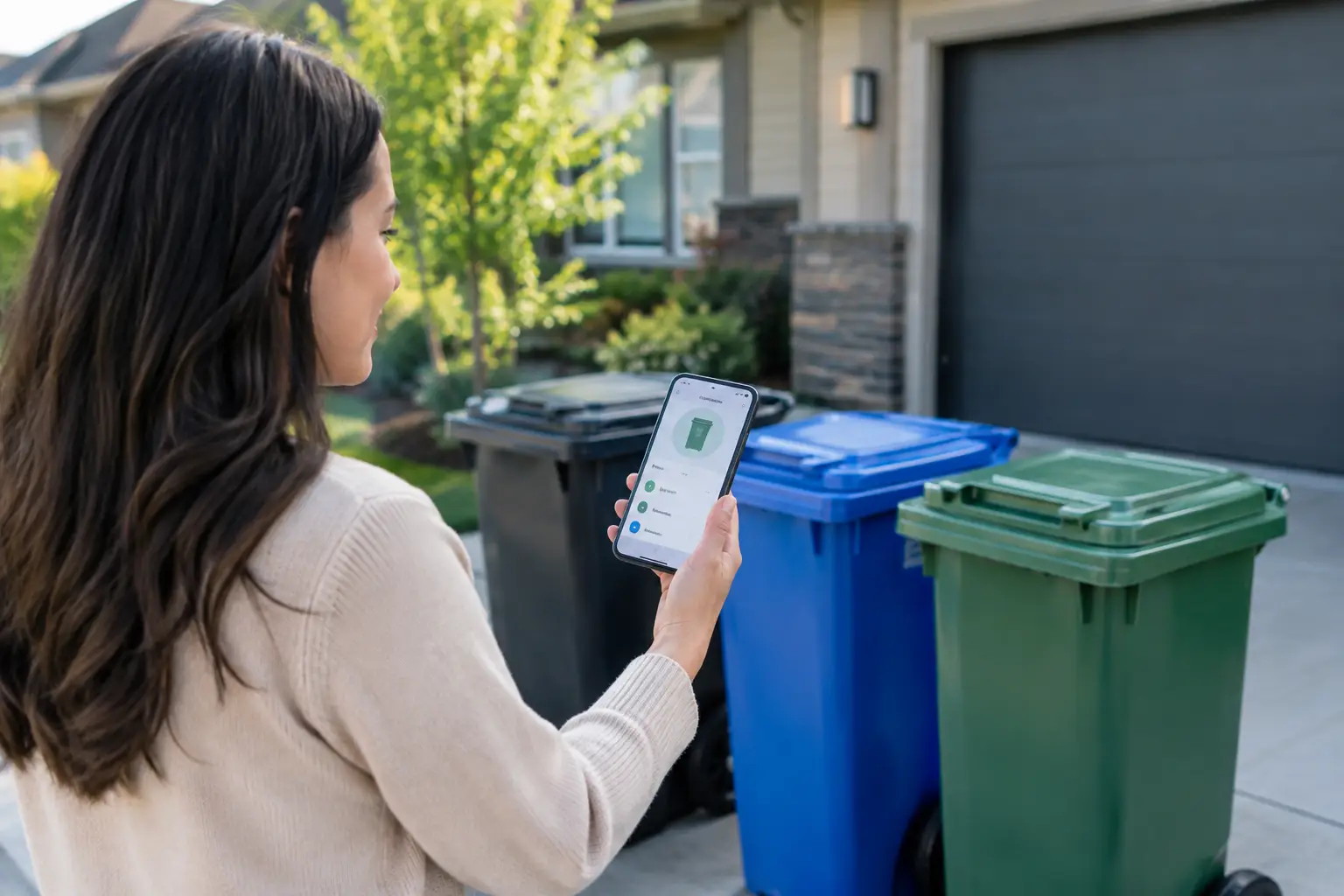
A missed collection day rarely happens because a household does not care. It happens because recycling alternates, green-bin service changes by season, a holiday moves pickup by a day, or someone assumes the bins go out tomorrow. Automated waste planning removes that uncertainty by turning a municipal schedule into a clear household routine.
For Canadian homes, the useful part is not simply having a calendar. It is having the correct schedule for the exact address, with the next pickups clearly shown and reminders delivered before bins need to go to the curb. Everything that matters, nothing that doesn’t.
What automated waste planning actually does
Automated waste planning connects a household’s address to the municipal collection rules that apply to that property. It identifies the collection zone, separates the relevant waste streams, accounts for recurring patterns, and updates the schedule when official holiday changes occur.
The result should be simple: you know whether garbage, recycling, organics, yard waste, or another material is collected next, and you receive a reminder early enough to act on it.
That sounds straightforward, but municipal schedules are often more complicated than they first appear. A city may have different routes on opposite sides of the same street. Recycling may alternate every other week. Yard waste may run only in spring and fall. Condo residents may have a private collection arrangement rather than curbside service. Good automation handles the first three reliably, while also making it clear when a property needs to confirm a different collection setup.
Why a PDF calendar is not a household system
Most municipalities publish collection information. That is useful, but publication is not the same as planning. A PDF, web calendar, or printed mailer still asks someone in the household to find the right zone, interpret the pattern, remember the date, and notice holiday exceptions.
That process works until routines get busy. A school event, work trip, long weekend, rental turnover, or a simple change in who takes out the bins can create a missed pickup. Then the household is left storing extra bags for another week or making an unnecessary trip to a depot.
Automated planning moves the work from memory to a dependable system. Instead of checking a calendar each week, the household sees what is next and gets a prompt at the right time. It is a small operational change with a practical payoff: fewer missed pickups and less last-minute sorting.
The address is the starting point
A schedule is only helpful when it matches the right property. General citywide collection information can be misleading, especially in municipalities with multiple routes or changing service days.
Address-level matching matters because waste collection is managed by zones, not broad postal-code assumptions. Two nearby homes can follow different schedules. The same is true for a rental property across town, a parent’s house, or a second home. Each address needs its own verified collection details.
This is where automated waste planning should do more than place a generic municipal calendar on a screen. It should match the address to the correct zone and show the relevant service days without requiring residents to decode route maps or colour-coded tables.
A useful schedule answers the next question first
Households do not usually need a full year of collection dates at once. They need to know what goes out next and what is coming soon enough to prepare.
A four-week view is often the right balance. It gives enough visibility for meal planning, seasonal yard work, travel, and household coordination without turning waste collection into another calendar project. You can see an upcoming recycling week, plan ahead for green-bin material, and avoid guessing when the next garbage pickup falls.
Holiday changes are where planning often fails
Holiday periods create many avoidable missed pickups. One statutory holiday can shift a route by a day, and that change can carry through the rest of the week. Residents who rely on a remembered Tuesday pickup may put bins out too early, too late, or not at all.
A reliable system treats holiday schedules as part of the schedule, not as a footnote. When the municipality publishes an official service adjustment, the future pickup dates should reflect it. The household should not have to search a news release or scan a seasonal notice to find out whether collection has moved.
There is still a practical limit: municipalities can occasionally announce changes at short notice due to severe weather or operational disruptions. Automation cannot prevent a service interruption, but it can reduce the chance that routine, published holiday changes are missed.
Reminders work best when they arrive before the scramble
The timing of a reminder matters. A notification sent after breakfast on collection day may be too late for households that leave early, manage children’s morning routines, or have a long walk to the curb. An evening-before reminder gives people time to sort materials, bring out bins, and coordinate with others at home.
For many households, one clear reminder is enough. Others need more flexibility. A landlord may want an email backup for a rental. An adult child supporting a parent may need reminders for a second address. A household with irregular work hours may prefer a different notification time.
The best automated waste planning setup is therefore simple by default and flexible where needed. It should not flood people with alerts or ask them to configure a complex workflow. Set the address, confirm the schedule, choose the reminder preferences, and let the system handle the recurring work.
A practical setup for your household
Start by confirming the exact service address, including the correct unit or property details where required. Review the upcoming collection schedule and make sure it reflects what the household receives. If the property uses a private building collection system, check with building management rather than assuming municipal curbside dates apply.
Next, decide who needs to receive the reminder. A single household may only need one evening notification. Homes with shared responsibilities may benefit from an email backup or reminders sent to the person who normally handles bins. For multiple properties, keep each address separate so a reminder for one location is never mistaken for another.
Finally, use the reminder as a quick sorting checkpoint. Before putting bins out, confirm that recycling is clean and accepted locally, organics are in the green bin where available, and yard waste follows seasonal rules. Collection schedules tell you when materials are picked up. Local sorting rules still determine what belongs in each stream.
Where automated planning makes the biggest difference
The value is most obvious when collection is not weekly and predictable. Alternating recycling weeks are easy to forget. Seasonal yard-waste programs create long gaps between pickups. Holiday shifts break familiar routines. Multi-address households multiply every one of those details.
It also helps renters and new residents get settled faster. Instead of learning a municipal calendar by trial and error, they can see what the address requires right away. For property managers and landlords, it offers a cleaner way to keep track of several homes without maintaining separate manual reminders.
CurbDay is designed around that practical need: enter an address, see the correct upcoming schedule, and receive a reminder before collection day. The focus is not on adding another app or another complex household dashboard. It is on making a recurring responsibility easier to get right.
Choose accuracy over more features
Not every waste reminder tool is equally useful. A calendar that looks polished but uses a broad neighbourhood schedule can create more confusion than no reminder at all. The essentials are accurate address matching, official-source schedule validation, clear visibility into the next pickups, and updates for scheduled holiday changes.
Extra features only matter if they support those basics. Multiple addresses are useful for families, rentals, and property managers. Adjustable reminder times help households with different routines. Email backup can provide reassurance when notifications are missed. But accuracy comes first.
The aim is not to think more about waste collection. It is to stop thinking about it until a timely reminder tells you exactly what needs to go out. Put the system in place once, then give your household one less detail to carry.